

Core casino game categories and rule basics
Understanding core casino game categories and their rule structures helps you evaluate odds, manage risk, and spot favorable conditions. This section walks through how games are classified, how regional house rules vary, and how to read on‑floor information so you can play with confidence and fewer surprises.
What defines a table game versus a machine game?
A table game is defined by live, dealer‑run play with shared outcomes, while a machine game is individually resolved by software or mechanical reels. In practice, table games like blackjack, roulette, and baccarat use physical cards or wheels, visible procedures, and direct interaction with a dealer or croupier. By contrast, slot machines and video poker rely on random number generators (RNGs) and personal screens, even when they mimic table layouts. Importantly, table games often allow betting decisions to react to visible information, whereas machine games lock in your risk the moment you press the button.
How house rules differ between Las Vegas, Macau, and Europe
House rules vary by region, shifting both volatility and long‑term expected return. In Las Vegas, blackjack commonly uses multiple decks, dealer hits soft 17 in many mass‑market pits, and side bets are aggressively promoted. Macau often emphasizes baccarat with higher table minimums, fewer side bets, and tighter table‑maximum controls to manage large VIP action. European casinos may spread more single‑zero roulette and use “la partage” or “en prison” rules, which reduce roulette’s house edge on even‑money bets. Because of these differences, the same nominal game can have meaningfully different profitability depending on where you sit down.
Minimum and maximum bets: how limits really work on the floor
Table limits define the smallest and largest wagers allowed per betting spot, but casinos also apply practical and discretionary controls. The printed minimum usually applies per initial bet, not including splits or doubles in blackjack, which can effectively raise your exposure mid‑hand. Maximums are often per box or position; high‑limit rooms may allow negotiated “table caps” for known players. On busy floors, supervisors may temporarily raise minimums on popular tables or during peak hours. Therefore, always confirm limits with the dealer or pit boss before buying in, especially if you plan to use progressive or scaling bet strategies.
How rule placards, felt layouts, and paytables communicate rules
Casinos communicate core rules through a combination of signage, table felt text, and electronic paytables. Rule placards near the dealer typically summarize critical items such as minimum and maximum bets, payout ratios, and key dealer rules like “Dealer hits soft 17.” The felt layout guides betting flow by labeling betting areas, side‑bet circles, and sometimes actions like “Double on any two cards.” For machine games, on‑screen paytables show symbol values, bonus triggers, and return structures, often with expandable “help” menus. Reading these elements before playing lets you verify payouts, identify optional bets, and avoid assumptions based on other casinos or online versions.
Common rule misunderstandings that cause disputes at casinos
Most disputes arise from players assuming rules are universal when they are actually property‑specific. Frequent flashpoints include blackjack payout rates on naturals (3:2 versus 6:5), whether surrender is offered, and if a dealer must hit or stand on soft 17. In roulette, confusion often centers on how chips are placed on splits, corners, and announced bets, which can change intended coverage. Slot and video poker players may misread paytables, expecting top jackpots without playing maximum credits or qualifying lines. To reduce friction, clarify rules before wagering, ask the dealer to confirm edge‑critical details, and avoid relying on memory from other venues.
Blackjack rules: from shoe procedures to payouts
Blackjack rules may look simple, but the details of shoe procedures, player options, and payout structures strongly affect your long‑term results. This guide walks through the mechanics step by step so you can read a table like a pro and understand what each rule really costs or earns you over time.
How a standard six‑deck blackjack shoe is dealt step by step
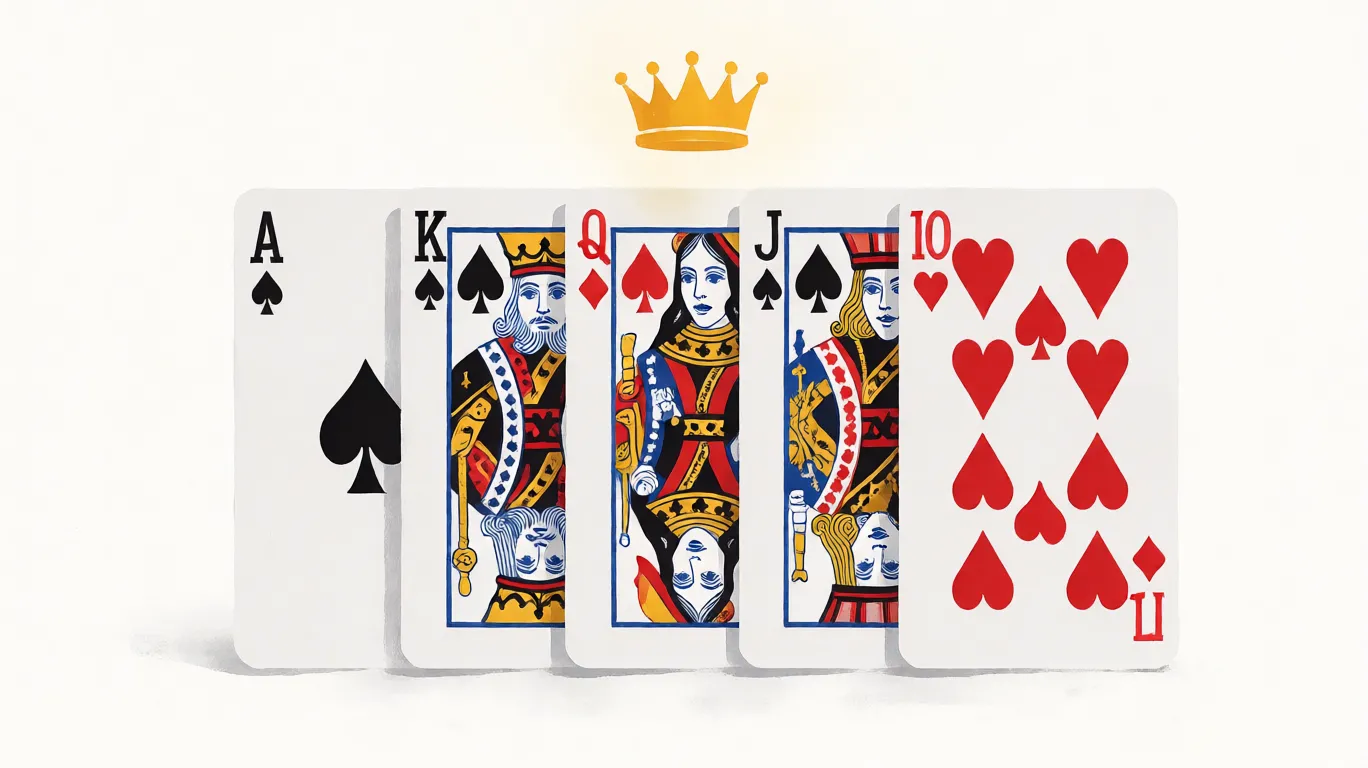
A standard six‑deck shoe follows a fixed sequence so the game stays fast, fair, and trackable. First, the dealer shuffles six decks together, often using an automatic shuffler, then inserts a plastic cut card to mark the penetration point, usually at about 75% of the shoe. Next, the dealer burns one card face down and begins dealing clockwise: one card to each betting spot, then a second card to each, with the dealer’s hand getting one face‑up and one face‑down (in American‑style dealing) or both face‑up (in European‑style). After all players act, the dealer resolves their own hand, pays winners, collects losing bets, and sweeps used cards into a discard tray until the cut card appears and the shoe is reshuffled.
Hit, stand, double, split, and surrender rules with concrete examples
Player decisions in blackjack revolve around five core actions that manage risk and reward on each hand. When you hit, you request another card; for example, you hit 12 vs dealer 2 because data shows the extra card improves your expected value. You stand when your total is strong or the dealer is weak, such as standing on 13 vs dealer 6 to let the dealer bust. You double down by doubling your bet and taking exactly one card, like doubling 11 vs dealer 10 when the shoe is rich in tens. You split equal‑rank pairs into two hands, for instance splitting 8‑8 vs dealer 6 to turn one bad 16 into two strong starting hands. Some tables also allow surrender, where you fold a weak hand such as 16 vs dealer 10 and forfeit only half your bet to reduce long‑term losses.
Dealer stands on soft 17 versus hits soft 17: rule impact with numbers
Whether the dealer stands or hits on soft 17 (a 17 containing an ace counted as 11, like A‑6) changes the house edge in measurable ways. In a typical six‑deck game with standard rules, dealer stands on soft 17 (S17) gives the house an edge of about 0.5% against a basic‑strategy player. When the dealer hits soft 17 (H17), the edge usually rises by roughly 0.2%, to around 0.7%, because the dealer improves more weak hands into winning totals. For example, with A‑6 vs a player 18, an extra card can turn the dealer’s hand into 19–21 instead of stopping at 17. Over thousands of hands, that small percentage difference translates into a noticeable increase in expected loss per hour at the same betting level. mentioned
Blackjack payout variations: 3:2, 6:5, and side bets in practice
Blackjack payout rules directly control how profitable a natural blackjack (an ace plus a ten‑value card) is for you. The traditional 3:2 payout returns $15 on a $10 bet and keeps the basic‑strategy house edge near 0.5% in many six‑deck games. A 6:5 payout cuts that to $12 on a $10 bet, typically adding about 1.4% or more to the house edge, which is a major downgrade. Meanwhile, optional side bets such as Perfect Pairs or 21+3 can pay 5:1, 10:1, or higher, but they often carry edges of 3%–10% against the player. In practice, serious players favor 3:2 tables and treat side bets as entertainment only, not as part of an optimal strategy.
Table rule differences between high‑limit and mass‑market pits
High‑limit blackjack tables usually offer more player‑friendly rules than mass‑market pits, but require larger minimum bets. In high‑limit rooms you are more likely to find 3:2 payouts, S17, late surrender, and the ability to double after splitting, all of which can push the house edge toward or even below 0.4% with perfect play. By contrast, main‑floor or low‑limit games often feature 6:5 payouts, H17, restricted doubling, and fewer surrender options, raising the edge well above 1%. As a result, advantage‑minded players sometimes bet more per hand at better‑ruled high‑limit tables because the improved rules statistically offset the higher stakes over the long run.
Roulette rules: layouts, bets, and house edge in practice
Understanding roulette rules means more than knowing where to place chips; it means seeing how layouts, bet types, and procedures shape the true cost of each spin. This guide walks through the practical differences between wheels, betting areas, and special rules that quietly change the house edge.
Single‑zero versus double‑zero wheels and their exact effects
Single‑zero (European) and double‑zero (American) wheels look similar, but they create very different house edges. A European wheel has numbers 1–36 plus a single zero, giving a house edge of about 2.70% on even‑money bets. An American wheel adds the double zero (00), which raises the edge to about 5.26% on most wagers. That extra pocket means the probability of any individual number hitting drops from 1/37 to 1/38. Over many spins, this difference compounds into a noticeably higher expected loss for the same bet size and strategy.
Inside and outside bets explained with real chip placement examples
Inside bets focus on specific numbers or small groups, while outside bets cover larger sections of the layout with lower payouts. For example, placing a chip directly on 17 is a straight‑up bet paying 35:1, while putting a chip on the line between 17 and 20 is a split that covers both numbers. A corner bet uses one chip on the intersection of 17, 18, 20, and 21 to cover four numbers at once. In contrast, outside bets like red/black or odd/even go in the boxes along the edge of the table, each covering 18 numbers but paying only 1:1, trading lower risk for more frequent but smaller wins.

En prison and la partage rules on French and European wheels
En prison and la partage are special rules on many French and some European tables that reduce the house edge on even‑money bets. With la partage, when the ball lands on zero, you immediately lose only half of your stake on red/black, odd/even, or high/low. With en prison, that same even‑money bet is “imprisoned” on the layout when zero hits and carried over to the next spin. If it wins on the following spin, your original stake is returned with no profit; if it loses, you forfeit it. These rules effectively cut the house edge on qualifying bets from 2.70% to about 1.35%, making them more favorable for long‑term play.
Racetrack bets and announced bets used by VIP and European players
Racetrack bets and announced bets let players target sections of the wheel rather than just the numbered grid. The racetrack layout, usually printed beside the main betting area, mirrors the physical order of numbers on the wheel. There, you can place neighbor bets, such as “17 and two neighbors,” which covers 17 plus two numbers on each side for a total of five straight‑up wagers. Announced bets like Voisins du Zéro, Tiers du Cylindre, and Orphelins bundle predefined sets of numbers into one call. High‑limit and experienced players favor these patterns to manage coverage and variance around specific wheel sectors.
How spin procedures, ball direction, and no‑more‑bets work
Spin procedures and dealer routines exist to keep the game consistent and to define when bets are valid. The dealer typically spins the wheel in one direction and the ball in the opposite, alternating directions between spins to avoid predictable patterns. While the ball circles the track, players may add or adjust chips until the dealer calls “no more bets,” which closes the betting window. After that call, any late chips are either removed or left unpaid, depending on house policy. Once the ball settles into a numbered pocket, the dealer announces the result, places the marker on the winning number, pays winners, clears losing chips, and then opens the layout again for the next round.
Craps rules: resolving rolls and managing complex bets
Understanding how each roll is resolved in craps is essential before you stack the layout with multiple bets. This guide walks through roll sequences, payout structures, and dealer procedures so you can track complex action confidently and verify that every decision at the table follows house rules. pick this
Come‑out roll, point establishment, and seven‑out with roll sequences
The come‑out roll starts a new round and determines whether a point is set or the hand ends immediately. On this first roll, totals of 7 or 11 are called a “natural” and usually win for pass line bettors, while 2, 3, or 12 are “craps” and typically lose for them. Any other total (4, 5, 6, 8, 9, or 10) becomes the point, which the dealer marks with a puck on the corresponding box number. From there, the shooter keeps rolling until either the point repeats, which resolves most line bets as a win, or a 7 appears, known as a seven‑out, which ends the hand and clears many wagers. Tracking this simple sequence—come‑out, point, then either point hit or seven‑out—is the backbone for understanding more advanced betting layers.
Pass line, don’t pass, come, and don’t come bets with payout facts
Pass line and don’t pass bets are even‑money wagers that ride the entire hand from come‑out to resolution. A pass line bet wins 1:1 when the shooter rolls a natural on the come‑out or repeats the point before a 7; it loses on craps numbers or a seven‑out. Conversely, a don’t pass bet wins 1:1 when the shooter sevens out after a point is set, but usually pushes on 12 depending on house rules. Come and don’t come bets mirror these mechanics after the point is established, using the next roll as a mini come‑out for that specific wager. Each come or don’t come bet then travels to its own number box and pays even money when that number wins before a 7, allowing players to stagger entries into the hand with clear, predictable returns.
Odds bets, place bets, and buy bets with numerical examples
Odds bets are optional add‑ons behind pass, don’t pass, come, and don’t come that pay true odds with no house edge on that portion. For example, backing a $10 pass line bet on a point of 6 with $20 odds pays $24 (6:5) if 6 hits before 7, plus $10 on the flat bet. Place bets let you wager directly on specific numbers (4, 5, 6, 8, 9, 10) to roll before a 7, with common payouts like 7:6 on 6 and 8 or 9:5 on 4 and 10. Buy bets are similar to place bets on 4, 5, 9, and 10 but pay true odds, usually in exchange for a 5% commission taken on the bet or the win. For instance, a $20 buy on 4 might pay $40 at 2:1 minus a $1 commission, giving a net profit of $39 when the 4 rolls first.
Field, proposition, and hardway bets as they are handled at the table
Field bets are one‑roll wagers on the next outcome, typically covering 2, 3, 4, 9, 10, 11, and 12 with varying payouts. Most layouts pay even money on winning field numbers, but enhance 2 and 12, often at 2:1 or 3:1, which the dealer announces as the dice land. Proposition bets, or “props,” sit in the center of the table and include single‑roll bets on specific totals, horn bets on 2, 3, 11, 12, and specialty combinations with higher house edges. Hardway bets back a pair of identical numbers, like hard 6 (3‑3) or hard 8 (4‑4), to appear before either a 7 or that total in an easy way. Dealers track these center‑table wagers carefully, resolving them immediately on qualifying rolls and removing or pressing chips according to the posted pay schedule.

Stickman, boxman, and dealer procedures for enforcing craps rules
The stickman, boxman, and base dealers each follow strict procedures to keep craps action orderly and fair. The stickman controls the dice, calls out each roll, and manages proposition bets, ensuring all wagers are set before the next toss. The boxman oversees the entire game, monitors chip handling, confirms large payouts, and resolves disputes using house rules and the layout markings. Base dealers handle player bets on their side of the table, placing chips correctly, announcing “no more bets” when required, and paying or taking wagers after the boxman’s approval. Together, this crew verifies roll outcomes, enforces table limits, and maintains a consistent rhythm so that complex bets are always resolved in the correct order.
Slot and electronic game rules: paytables and configurations
Understanding slot and electronic game rules starts with reading paytables, knowing configuration options, and recognizing how they shape risk and return. This section walks through the core mechanics so you can interpret game data, compare machines, and make informed, rule‑based decisions on what and how to play.
How paylines, ways‑to‑win, and bet multipliers actually function
Paylines, ways‑to‑win, and bet multipliers define how each spin converts into wins and total cost. A payline is a fixed or selectable pattern across the reels where matching symbols must land to pay. In contrast, a ways‑to‑win system pays for any matching symbols on adjacent reels, usually left to right, regardless of exact horizontal position. Modern video slots often offer 243, 1,024, or more ways, which increases hit frequency but usually lowers individual line prizes. Bet multipliers then scale your stake: you choose a base coin value and the number of coins or credits per line, and the game multiplies this by the active lines or ways. As a result, two games with the same denomination can have very different minimum and maximum bets, depending on how many lines are forced on and how the multiplier ladder is structured.
Reading a slot paytable: symbols, scatters, and bonus triggers
A slot paytable explains exactly what each symbol combination pays and how features are triggered. Regular symbols usually require three or more matches on a payline, with higher‑value icons paying more credits per line bet. Wild symbols substitute for most other icons to complete wins, and some wilds carry their own payout or multiplier effect. Scatter symbols pay when a certain count appears anywhere on the reels, not just on a line, and they often unlock free spins or bonus rounds. The paytable also details feature triggers, such as collecting special symbols or filling meters, and states whether free games use enhanced reels or added wilds. By scanning the paytable for top symbol values, scatter requirements, and bonus frequency hints, you can quickly gauge a slot’s potential and volatility profile before committing to longer sessions.
Return‑to‑player (RTP) settings and volatility with real ranges
Return‑to‑player (RTP) is the long‑term theoretical percentage of wagered money a game pays back to players. In regulated markets, online slots commonly range from about 94% to 97% RTP, while some land‑based cabinets may sit lower, around 88% to 94%. Volatility, sometimes called variance, describes how that return is distributed over time: low‑volatility games deliver frequent small hits, whereas high‑volatility titles produce fewer but larger wins. Developers often tune volatility by adjusting top‑prize sizes, bonus round frequency, and base‑game hit rate. For example, a 96% RTP slot can feel very different at low, medium, or high volatility, even though the long‑term payback is similar. When paytables or help screens show hit frequency estimates, jackpot sizes, and feature odds, you can infer whether a game suits short, low‑risk sessions or longer, swing‑heavy play. related article
Video poker rules: pay schedules and optimal‑play expectations
Video poker rules revolve around the pay schedule, which lists payouts for each five‑card hand ranking. A “full‑pay” game uses the most generous standard table for its variant, such as 9/6 Jacks or Better, where a full house pays 9 coins and a flush 6 coins per coin bet. Small changes in these numbers, like dropping to 8/5, significantly reduce the theoretical return. With perfect strategy—using mathematically derived hold/draw decisions—full‑pay Jacks or Better can reach about 99.5% RTP, while weaker tables may fall to 97% or less. The machine’s help screen usually shows the exact schedule for 1–5 coins, with a bonus jump on the royal flush at max coins. By comparing these posted tables and applying basic strategy charts, intermediate players can estimate long‑term expectations and choose the most efficient machines.
Electronic roulette, sic bo, and hybrid stadium game rule specifics
Electronic roulette, sic bo, and hybrid stadium games follow standard table rules but automate betting and resolution. Electronic roulette typically offers the same bets as a live wheel, yet the house edge depends on wheel type: European (single zero) averages 2.70% edge, while American (double zero) rises to 5.26%. Sic bo terminals list payout odds for each total and combination; however, electronic versions often use conservative paytables, increasing the house advantage beyond traditional layouts. Hybrid “stadium” setups link many terminals to a shared live or automated wheel or dice shaker, synchronizing results while allowing individual bet limits and side bets. The rules screen usually details minimums, maximums, and any modified payouts, such as reduced returns on top‑heavy bets. Reviewing these digital paytables is essential, because small odds changes can materially shift long‑term cost compared with classic felt tables.
Poker, baccarat, and specialty game rule variations
Rule variations in poker, baccarat, and specialty games shape house edge, strategy, and player experience. Understanding how formats differ, how side bets work, and how casinos document procedures helps you evaluate risk, compare games accurately, and adapt your decisions at the table.
Casino poker rules: house‑banked versus player‑banked formats
Casino poker rules differ mainly by who acts as the banker and how wagers resolve. In house‑banked poker, such as Caribbean Stud or Three Card Poker, you play directly against the casino, which sets fixed pay tables and ante/raise structures. In player‑banked formats, like traditional cash‑game Texas Hold’em, players wager against each other while the house collects a rake or time charge. This distinction affects variance, maximum exposure, and how advantage is calculated. Intermediate players should review posted rules for qualifying hands, bet limits, and rake caps, since small structural changes can significantly alter long‑term expected value.
Baccarat punto banco rules and drawing procedures with examples
Punto Banco baccarat follows rigid drawing rules that remove player discretion but still affect betting decisions. Both Player (Punto) and Banker (Banco) hands start with two cards, and totals use a modulo‑10 system where only the last digit counts. Natural totals of 8 or 9 stand automatically for both sides. Otherwise, the Player may draw a third card based on a simple threshold, and the Banker’s third‑card action follows a detailed matrix that depends on both totals. For example, if the Player stands on 6 and the Banker has 5, the Banker draws; if the Player draws a third card of 8, the Banker stands on 3 but draws on 4 or 5. Understanding these fixed procedures lets you verify outcomes and assess the true edge on Banker versus Player bets.
Side bets in baccarat and poker: rule sets and documented payouts
Side bets in baccarat and poker introduce higher volatility wagers with distinct rule sets and payout tables. In baccarat, common options include Player/Banker Pair, Perfect Pair, and Dragon bonus bets, which pay for events like matching ranks or large point spreads, often at odds from 3:1 up to 30:1 or more. Poker side bets, such as Bad Beat jackpots or progressive royal flush bonuses, usually require a minimum qualifying hand and pay fixed or progressive amounts documented on placards. Casinos publish these pay schedules near the table or on electronic displays, listing exact odds, minimum wagers, and contribution rates. Because side bets often carry a higher house edge, data‑driven players compare posted returns and volatility before adding them to their regular betting mix.
Popular proprietary games like Three Card Poker and Ultimate Texas Hold’em
Proprietary table games such as Three Card Poker and Ultimate Texas Hold’em blend familiar poker rankings with unique betting structures. Three Card Poker typically offers two main wagers—Ante/Play and Pair Plus—with simplified hand rankings where a straight beats a flush, and pay tables that specify bonuses for straights, three of a kind, and straight flushes. Ultimate Texas Hold’em uses community cards but allows players to raise at different decision points, with earlier raises offering larger multiples of the ante. Both games rely on detailed, trademarked rule sheets that define qualifying dealer hands, bonus payouts, and side bet options. Since casinos may license slightly different pay tables, experienced players check the posted schedules and compare them to published house‑edge figures before choosing where to sit.
How casinos document, update, and communicate rule changes to players
Casinos document game rules through internal procedures, regulatory filings, and visible player‑facing materials. Core rules and approved variations are typically logged in a rules manual and submitted to gaming regulators, who require formal approval before changes take effect. On the floor, casinos communicate updates via table layout text, laminated rule cards, digital signage, and dealer briefings that standardize explanations to players. When pay tables or side bets change, management often replaces felt layouts, updates electronic displays, and issues written notices to comply with disclosure requirements. For informed players, periodically reviewing posted rules, asking supervisors about recent revisions, and checking regulatory websites provides a reliable way to track evolving game conditions.